
Why Industrial Hemp Still Needs a Supply Chain to Match Its Promise
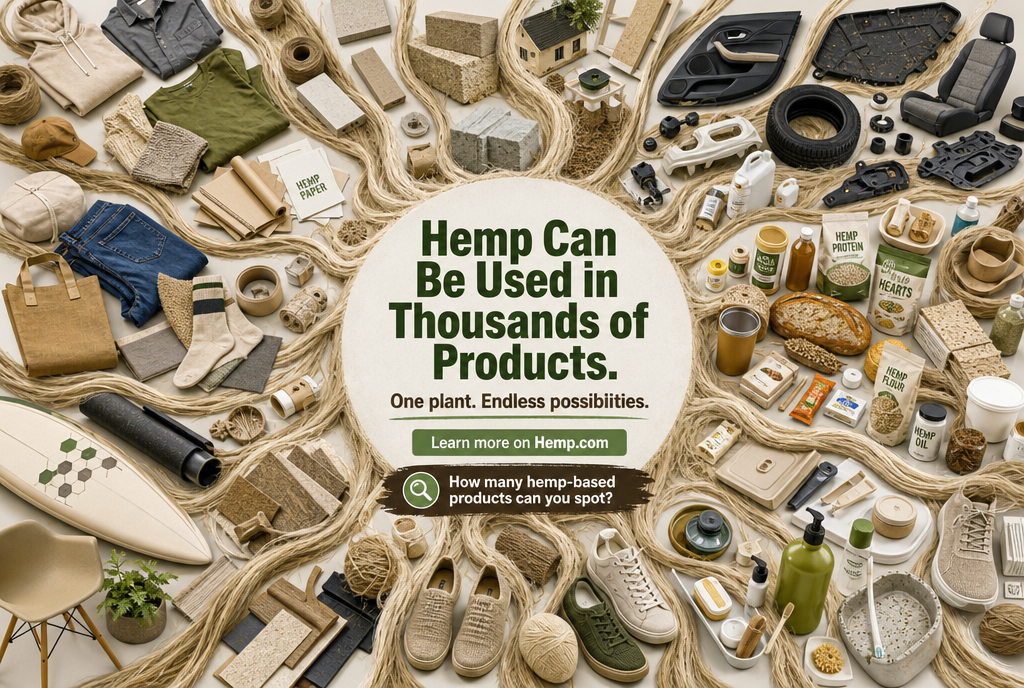
If you have never heard of industrial hemp, you are not alone—and that is part of the story. For decades, the same botanical species that supplied rope for sailing ships and seed for food was folded into America’s drug-control debates, leaving a crop that farmers could once grow legally sitting in regulatory limbo. Congress reopened the field in 2018, and entrepreneurs rushed in with a cheerful pitch: one plant, endless opportunities.
The tension is that the opportunities are real, but they are not automatic. A hemp stalk is not a finished product any more than a corn stalk is corn syrup. It must be harvested, dried, decorticated, spun, pressed, or milled—and someone must buy it at a price that covers the work. Today’s U.S. hemp sector is less a magic bullet for sustainability than a reconstruction project: rebuilding knowledge, machinery, and markets that other fiber crops and synthetics displaced over the twentieth century. For readers meeting hemp for the first time, the useful question is not “Can this plant do everything?” but “Which parts of the plant go where—and what still has to be built for any of it to scale?”
The core industry problem
Start with the basics. Industrial hemp is Cannabis sativa L.—the same species as marijuana—but U.S. law draws a bright line on chemistry, not folklore. Under the USDA hemp program, licensed growers produce cannabis with total delta-9 THC at or below 0.3% on a dry-weight basis; material above that threshold is treated as marijuana, not hemp. That definition, rooted in the Agriculture Improvement Act of 2018, is why a fiber field and a high-THC cannabis operation are regulated as different worlds even though they share a Latin name.
Next, the anatomy. A mature hemp plant offers several distinct raw streams. Bast fiber runs along the outer stalk—strong, long strands historically used for rope, textiles, and paper pulp. Hurd (also called shives) is the woody inner core, lighter and bulkier, used in animal bedding, absorbents, and lime-bound building mixes often marketed as hempcrete. Grain and seed carry oil and protein for food, feed, and cosmetics. Floral biomass became the dominant U.S. story after legalization because cannabinoid markets pulled acreage toward CBD extraction—often at the expense of fiber infrastructure farmers would need for everything else.
The core industry problem is therefore structural: hemp’s versatility is botanical fact, but markets run on processing density—regional decorticators, degumming lines, grain cleaners, certified food paths, and construction-material standards—not on slogans. Without those nodes, growers face the classic chicken-and-egg trap USDA economists have warned about for years: processors will not invest without reliable feedstock, and farmers will not plant without reliable buyers.
Deep reporting
Historically, hemp was ordinary infrastructure. University of Florida extension history notes peak U.S. production in the nineteenth century and wartime spikes when fiber demand surged; USDA economist reviews document pilot-program acreage climbing from zero in 2013 to more than 90,000 acres by 2018 before full commercial legalization. Sailcloth, rigging, and coarse textiles were everyday hemp applications long before “sustainability” was a marketing word. The crop did not vanish because it stopped growing; it faded as cotton, synthetic fibers, and global trade reshaped cost curves.
After the 2018 Farm Bill, production rebounded—but not evenly across end uses. USDA’s Economic Research Service review of state pilot programs cautions that long-term viability remains uncertain, citing competition with other crops, opaque pricing, and regulatory risk. More recent USDA National Agricultural Statistics Service reporting puts the value of U.S. hemp production at $739 million in 2025, with planted open-field area of roughly 49,267 acres—growth, yes, but concentrated in utilizations that do not automatically build textile or construction supply chains.
On the fiber side, trade analysts and sector reports describe a persistent decortication gap: farmers can produce stalks, yet North America still lacks enough primary processing to convert them into uniform, graded fiber at industrial throughput. That mismatch shows up as stored bales, volatile prices, and cautious brand procurement. Editor follow-up: this draft includes no on-the-record interviews with growers, gin operators, or food manufacturers; those voices are needed to ground anecdotal “promise versus reality” tension in named facilities and contract terms.
For consumers, the reporting gap is definitional. UNCTAD’s 2022 hemp commodities report notes that international trade statistics capture only a sliver of hemp’s economic footprint—recorded hemp trade flows near $42 million against a much larger estimated market—because many hemp-derived goods are classified under other product codes. Readers searching grocery aisles for “hemp” may see seed oil and hulled hearts (food ingredients regulated like other foods) while fiber applications hide upstream in composites, insulation, or blended textiles never labeled as hemp.
What is really changing
Why this matters now is that climate and procurement narratives are colliding with a crop that can plausibly serve multiple low-carbon material pathways—if the chain is designed end to end. Hemp’s fast growth cycle and whole-plant logic fit circular-economy talking points: seed for nutrition, fiber for durable goods, hurd for lightweight construction fills. UNCTAD policy briefs argue for exploiting all plant fractions rather than betting on a single hot market, because dual-purpose or triple-purpose cropping spreads revenue risk across seasons.
But analysis has to stay honest about substitution economics. Hemp fiber does not automatically beat cotton, fiberglass, or oriented strand board on cost, availability, or performance without specification work. Building materials using hurd binders face code, fire, and moisture tests like any emerging bio-based input. Automotive and packaging applications often want consistent fiber length and moisture content—variables that field-grown biomass delivers unevenly unless grading and storage improve.
Second-order effects run through rural finance and land use. Hemp can rotate with corn or soy where regulations allow, potentially spreading farm income—but only if local processors exist to absorb stalks before quality degrades. When floral cannabinoid markets overheated and corrected, many operators learned that market sequencing matters: a boom in one fraction does not fund decortication for another. Policy stability matters too; FDA retains authority over many hemp-derived products in commerce, and state programs still differ on licensing, testing, and transport. For a general reader, the takeaway is systems thinking: hemp helps when farms, processors, standards bodies, and buyers align—not when a single SKU claims to save the planet.
Who wins and who loses
Potential winners include diversified growers who can pivot among grain, fiber, and contracted floral production; regional processors that solve decortication and degumming bottlenecks; food brands using hulled hemp seed and oil as recognized ingredients (with compliant labeling); and construction firms piloting bio-based wall systems where building codes accept them. Seed handlers and certified genetics providers also benefit when THC compliance testing is non-negotiable—hot crops must be destroyed under USDA rules, a costly failure mode.
Exposed players include single-market growers tied to one hype cycle; small brands that imply environmental miracles without chain-of-custody data; and municipalities that permit hemp processing without zoning for dust, odor, or traffic from bulky stalks. Consumers can lose when wellness marketing blurs food facts with unapproved drug claims—an area where FDA testimony has been explicit that legal hemp production does not mean all hemp products are lawful in all channels.
Incumbent fiber and plastics suppliers are not disappearing overnight; they control scale, certification, and just-in-time logistics. Hemp’s near-term wins are more likely in blended, specification-driven niches—fiber reinforcement, specialty paper, animal bedding, seed nutrition—than in wholesale replacement of established commodities. Farmers without written offtake remain the most vulnerable link whenever prices swing on floral demand far from their fields.
Evidence file
Legal definition and oversight: The USDA Domestic Hemp Production Program implements 2018 Farm Bill requirements—licensing, acreage reporting, THC testing, and disposal of non-compliant plants. FDA’s 2019 congressional testimony summarizes hemp’s removal from the Controlled Substances Act definition of marijuana while preserving FDA jurisdiction over many products derived from cannabis.
Production and economics: USDA ERS publication EIB-217 documents pilot-program outcomes, historical U.S. acreage peaks, and viability challenges. USDA NASS hemp reports and the 2022 Census of Agriculture hemp tables provide farm-count, utilization, and sales breakdowns by state and farm size—useful for grounding “who actually grows this” beyond influencer narratives.
Uses and value chain: UNCTAD’s commodities report catalogs fiber, seed, and downstream applications and highlights trade-statistics blind spots. Peer-reviewed work such as the review of hemp as a food and nutraceutical ingredient describes seed composition and processing history without substituting for clinical outcome claims—appropriate for nutrition context, not disease treatment.
What we deliberately excluded: syndicated market-size forecasts with opaque methodologies, social-media “25,000 products” figures without primary citations, and any statistic tying hemp to specific carbon tonnage or medical outcomes without peer-reviewed sourcing. Editors should add company filings, state agriculture bulletins, and facility tours before treating processing-capacity statements as definitive.
Industry outlook
Over the next several years, the credible baseline scenario is multi-stream normalization: grain and seed continue to reach food and cosmetic channels where labeling and THC testing are manageable; fiber acreage grows only where decortication or regional hubs come online; construction pilots expand slowly alongside code development and insurer acceptance. A more optimistic scenario pairs federal or state procurement—military textiles, highway sound barriers, public building pilots—with multi-year offtake contracts that justify capital equipment. A pessimistic scenario replays boom-bust dynamics if floral markets distract from infrastructure again.
For entrepreneurs, the durable play aligns with UNCTAD’s “whole plant” framing: design revenue from several fractions rather than betting on one extract. For consumers curious about hemp’s “endless opportunities,” the practical entry points are tangible—hemp seed in the pantry, hemp-blend textiles where content is disclosed, hemp-lime insulation in permitted builds—not abstract supercapacitor headlines that remain lab-scale without named commercial suppliers.
Sources & methodology
This feature synthesizes USDA AMS hemp program materials, USDA ERS and NASS publications, FDA congressional testimony, UNCTAD commodity-sector reporting, and peer-reviewed literature on hemp food ingredients. It does not rely on fabricated interviews, proprietary datasets, or field observations. Historical context draws on USDA-linked economic reviews and extension history summaries rather than unsourced blog timelines. Before publication, editors should verify all outbound links, assign a visible byline with any industry affiliations disclosed, add at least two primary sources (farmer, processor, or state agriculture official), and reconcile any updated NASS figures with the latest release. Wellness and CBD references must stay within FDA-compliant framing—no disease-treatment claims. Directory or affiliate links to hemp product vendors require clear monetization disclosure if added during layout.
Find suppliers
Browse verified industrial hemp businesses in the Hemp.com directory.