
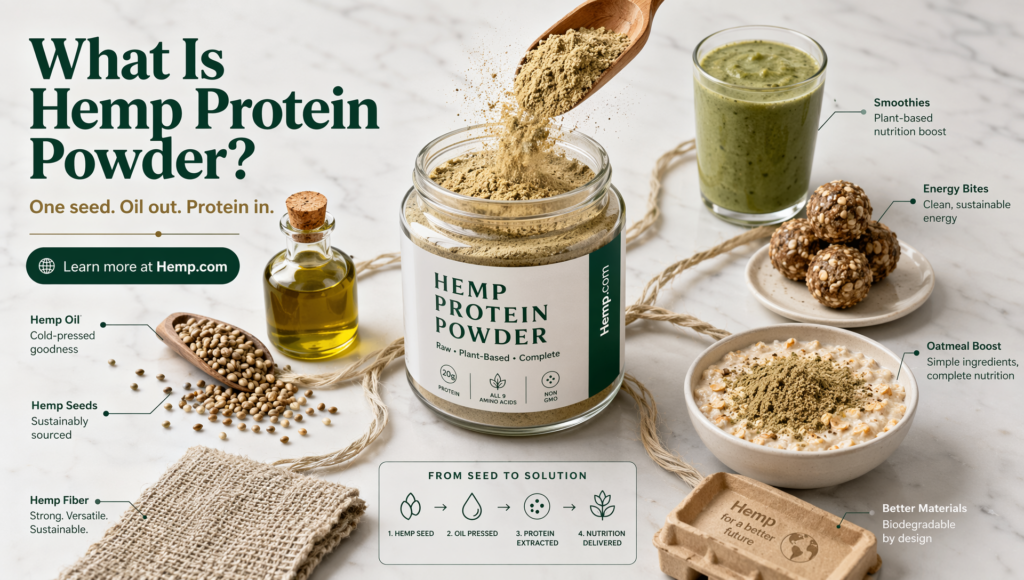
The global plant-protein market is racing to feed a world that wants more protein with less environmental baggage. Whey dominates gym shelves. Pea and soy fill vegan tubs. Yet one of the oldest protein crops on Earth—industrial hemp—has been hiding in plain sight as a powder made from something most people already recognize: the seed.
Not the flower. Not CBD oil. Not a wellness fad tied to cannabis culture. Hemp protein powder is a food ingredient born from the same supply chain that produces hemp seed oil, hemp textiles, and hemp building materials. When oil is cold-pressed from hemp seeds, what remains is a protein- and fiber-rich meal that gets milled into a fine, earthy powder. It is industrial agriculture turned into something you can scoop into a morning smoothie—and it is arriving on grocery shelves just as consumers start asking harder questions about where their protein actually comes from.
If you have never heard of it, you are not behind. You are early.
What Is Hemp Protein Powder?
Hemp protein powder is a plant-based protein made from Cannabis sativa L. seeds—the same industrial hemp crop legalized for U.S. production under the 2018 Farm Bill. Despite the botanical name, food-grade hemp seeds used for protein are not the same product as high-THC cannabis flower, and they are processed for nutrition—not intoxication.
The powder starts in the field as an industrial hemp crop grown for seed, fiber, or dual-purpose harvests. After harvest, seeds are cleaned and often dehulled to isolate the soft inner kernel sometimes sold as hemp hearts. Manufacturers then cold-press the seeds to extract hemp seed oil. What is left is called press cake or hemp meal—a dense material still loaded with protein, fiber, and minerals. That meal is milled and sifted into the fine tan or greenish powder sold as hemp protein.
Most quality products are minimally processed: one ingredient, no dairy, and often no soy. Protein concentration varies by brand and milling grade—some powders land near 50% protein by weight, while others retain more fiber and healthy fats from the seed. You can verify specific products through the USDA FoodData Central database, which lists branded hemp protein powders with nutrition facts submitted by manufacturers.
In the United States, hemp seed protein powder has a documented regulatory path. The FDA reviewed hemp seed-derived ingredients—including hemp seed protein powder—and issued a no-questions response to Generally Recognized as Safe (GRAS) notices, confirming these ingredients can be legally used in human food when manufactured to established specifications. The agency also notes that hemp seeds do not naturally contain cannabidiol (CBD) or tetrahydrocannabinol (THC) in the way cannabis flower does—a distinction that matters for shoppers who worry about drug-test crossover or psychoactive effects.
How People Actually Use It
Hemp protein powder is versatile because it behaves like other plant proteins, with a mild, nutty, slightly earthy flavor that pairs well with fruit and spices.
- Smoothies and shakes: The most common use. One scoop blends into banana-berry smoothies, post-workout shakes, or plant-based meal replacements. The powder adds protein and fiber without the chalky sweetness overload of some mass-market blends.
- Baking and snacks: Home cooks and brands fold hemp protein into muffins, protein pancakes, energy bites, and nutrition bars. Because it includes fiber and some residual fat, it can add structure and moisture to baked goods—though you may need to adjust liquid ratios compared with refined whey.
- Everyday meal boosting: Stir a tablespoon into oatmeal, yogurt alternatives, or savory soups for a quiet protein bump. Athletes, vegans, and busy parents use it this way when they want whole-food nutrition without opening a second package of supplements.
Why Organic Hemp Protein Powder Is Your Best Bet
Not all hemp protein is equal. Hemp is a hardy crop, but it can accumulate soil contaminants when grown on compromised land—a known trait of hemp’s phytoremediation history in research literature. For a product you consume daily, USDA Organic certification is a practical quality signal: it indicates the crop was grown without most synthetic pesticides and under audited organic standards. Look for single-ingredient labels, transparent lot testing where available, and third-party seals such as Non-GMO Project verification when those claims matter to your household.
Hemp Protein Powder: The surprising insight
Here is the detail most protein shoppers miss: hemp protein powder is often a byproduct of hemp seed oil production—not a separate industrial process invented for the gym aisle. Every bottle of cold-pressed hemp oil leaves behind a protein-rich cake that used to be undervalued. Modern brands are now turning that co-product into one of the few plant proteins that naturally contains all nine essential amino acids—the building blocks your body cannot make on its own.
That does not mean hemp protein matches whey gram for gram in every category. Research on hemp protein quality suggests it is generally lower in the amino acid lysine compared with soy or animal proteins, and its digestibility scores in standard protein-quality models tend to fall below isolated dairy or soy proteins. But hemp brings something many isolates strip out: fiber, minerals, and healthy unsaturated fats in the same scoop. For consumers who want a whole-seed nutrition profile rather than a purified amino acid fraction, that trade-off is exactly the point.
The shareable version: one industrial hemp seed can become oil, protein, and downstream ingredients across food and materials supply chains. The powder in your pantry is not a side hustle—it is the nutrition half of a crop built for efficiency.
Impact to the Hemp Industry, What’s at stake?
Farmers and processors win when seed hemp markets diversify beyond oil alone. Protein powder gives growers and cold-press facilities a second revenue stream from the same harvest, improving the economics of industrial hemp as a food crop rather than a single-product gamble.
Plant-based food brands are racing to differentiate in a crowded protein aisle. Hemp offers a compelling story— allergen-friendly positioning for many formulations, a complete amino acid profile rare among plant sources, and a sustainability narrative tied to a fast-growing crop. Formulators blend hemp with pea or rice protein to balance amino acid gaps, which is why you increasingly see it in premium vegan protein blends.
Retailers and regulators must keep consumer education ahead of confusion. Shoppers still conflate hemp protein with CBD wellness products. Clear labeling, FDA-aligned GRAS manufacturing, and transparent THC testing protocols will separate legitimate food brands from the gray market noise that has slowed broader hemp ingredient adoption.
Consumers benefit from choice—but should read labels critically. Protein percentage, fiber content, and added sweeteners vary widely. A powder that is 50% protein by weight behaves differently in recipes than a high-fiber, lower-protein meal base. Neither is wrong; they serve different goals.
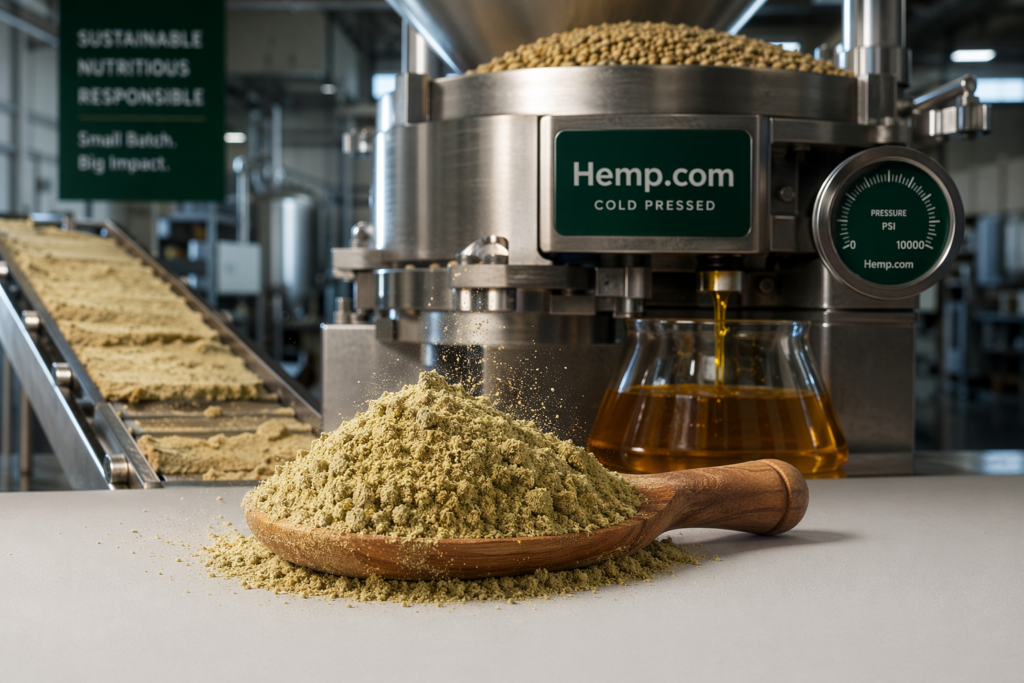
Did you know?
- Hemp seeds are roughly 25% protein by composition in research summaries—a concentration that makes the press cake left after oil extraction a natural protein ingredient, not an artificial isolate engineered in a lab.
- The dominant proteins in hemp seed are edestin and albumin—storage and globular proteins that together supply all nine essential amino acids, a rarity among plant-based protein sources that are not soy or quinoa.
- According to FDA GRAS documentation for hemp seed protein powder, intended food uses include smoothies, baked goods, cereals, nutrition bars, and plant-based meat alternatives—signaling how mainstream the ingredient has become in formulation circles.
- Branded hemp protein powders listed in USDA FoodData Central commonly deliver about 12 grams of protein per quarter-cup serving, alongside substantial dietary fiber—a different nutrition profile than whey isolate, which is protein-dense but fiber-free.
- Hemp protein is not CBD protein: the FDA explicitly distinguishes hemp seeds from cannabinoid-rich flower parts, and GRAS evaluations for hemp seed ingredients address seed-derived products that do not raise the same regulatory issues as CBD added to food.
You saw it early
Most Americans still reach past hemp protein without recognizing it—yet the ingredient checks boxes the food industry is betting on next: plant-based, minimally processed, supply-chain efficient, and versatile across drinks, baking, and functional foods. You are reading this before hemp protein becomes as default as pea protein on every shelf.
What to watch: protein concentration tiers (roughly 50% versus higher-refined grades), more organic domestic sourcing as U.S. hemp seed acreage matures, and clearer front-label differentiation between hemp protein and hemp-derived CBD products. If you try it, start with an organic, single-ingredient powder in a smoothie or batch of energy bites—two low-risk entry points that show you the flavor and texture before you commit to a daily routine.
The future of industrial hemp is not only fiber panels and bioplastics. It is also in your kitchen.
Why Hemp.com
Hemp.com documents the full arc of industrial hemp—from field economics and processing infrastructure to the consumer ingredients arriving in stores today. Hemp protein powder is where supply-chain innovation meets everyday nutrition: a practical way to experience what this crop offers without the confusion that surrounds other hemp products. Explore our coverage of hemp foods, farming, and verified directory partners when you are ready to compare sources—or simply to understand what is in the scoop.
Explore further
Ready to go deeper? Browse Hemp.com for coverage of industrial hemp farming, hemp food ingredients, and organic certification basics. When you shop, compare single-ingredient organic powders against blended plant proteins to match your recipe and macro goals. Our directory connects readers with hemp food brands, processors, and suppliers along the seed-to-scoop supply chain. Disclosure: Some directory links may be monetized or sponsored; editorial guidance here is prepared independently to help you evaluate products on merit.
Find suppliers
Browse verified industrial hemp businesses in the Hemp.com directory.