
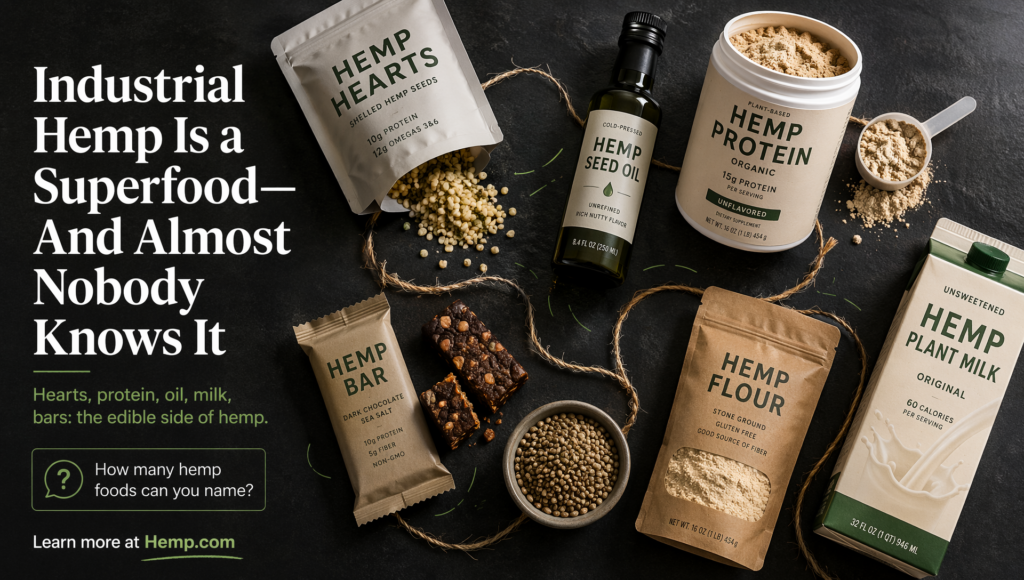
Walk down a grocery aisle built for plant-based eating and you will see almond milk, oat yogurt, pea protein, and a dozen other crops fighting for shelf space. Meanwhile, one of the oldest cultivated plants on Earth—industrial hemp—has been quietly feeding people for millennia, then largely vanished from Western kitchens during decades of prohibition. That is changing fast.
Today, the same crop powering conversations about sustainable textiles and hemp building materials is re-entering the food supply as hemp hearts, hemp protein powder, cold-pressed oil, plant-based beverages, and snack bars. For many readers, the surprise is not that hemp can be eaten—it is that a single industrial crop can deliver complete plant protein, essential fatty acids, and a growing menu of modern formats without the psychoactive effects associated with marijuana.
If you have only thought of hemp as rope, insulation, or a cannabis cousin, you are about to discover a food category that sits at the intersection of agriculture, nutrition science, and the next wave of ingredient innovation.
The Hemp superfood story
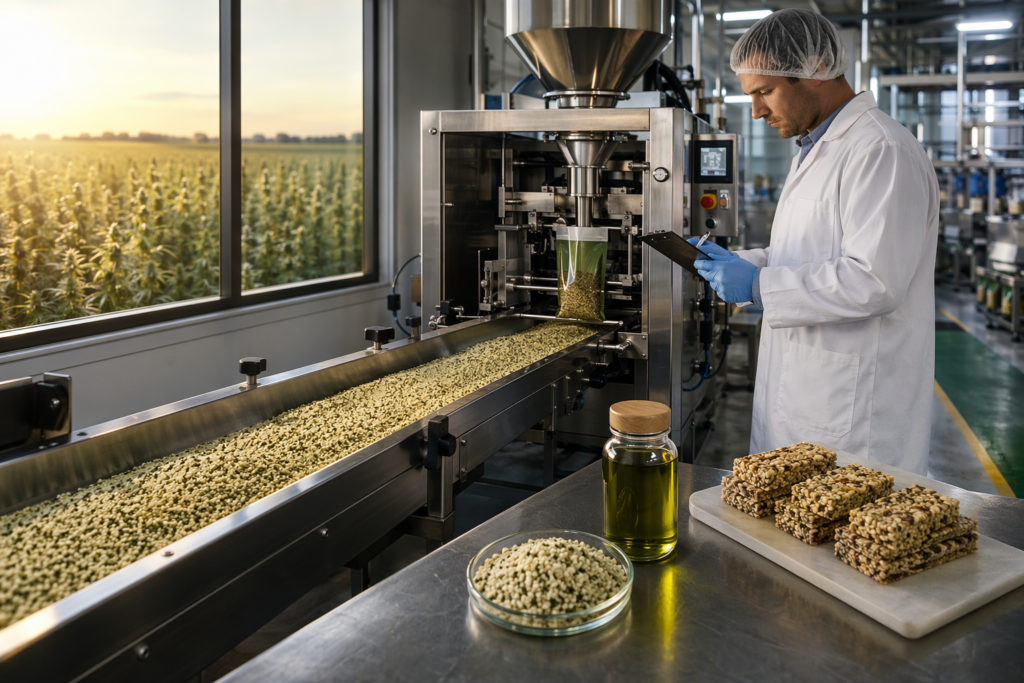
Hemp food starts with the seed—not the stalk, not the flower. Shelled seeds, commonly sold as hemp hearts, are the gateway product for most consumers: mild, nutty, and easy to sprinkle on almost anything. From there, the supply chain branches. Seeds are pressed into hemp seed oil, milled into flour, or processed into hemp protein powder and concentrates used in shakes, bars, cereals, and dairy-style alternatives.
Legally, U.S. industrial hemp is defined as Cannabis sativa L. with no more than 0.3% delta-9 THC on a dry-weight basis under the USDA Domestic Hemp Production Program. Once compliant hemp leaves the farm, food manufacturing falls under FDA oversight. In 2018, the FDA concluded it had no questions about GRAS (generally recognized as safe) notices for three hemp-seed ingredients: hulled hemp seed, hemp seed protein powder, and hemp seed oil—opening the door to mainstream formulations in beverages, baked goods, bars, spreads, and meat and dairy alternatives, as described in the agency’s hemp seed GRAS update.
On the nutrition side, USDA FoodData Central lists hulled hemp seeds as a dense source of plant protein and polyunsaturated fat. A 3-tablespoon (30 g) serving provides roughly 9.5 g of protein, 14.6 g of fat, and about 2.6 g of alpha-linolenic acid (ALA), an essential omega-3 fatty acid—along with magnesium, iron, zinc, and phosphorus. That profile helps explain why hemp is showing up far beyond niche health stores.
The product landscape has expanded accordingly. Shoppers can now choose among:
- Hemp hearts (shelled seeds) for salads, bowls, and baking toppers
- Whole hemp seeds (higher fiber; hull intact)
- Hemp protein powder and concentrates for smoothies and sports nutrition
- Hemp seed oil for dressings and finishing (not ideal for high-heat frying)
- Hemp flour for breads, pancakes, and gluten-free blends
- Hemp milk and other plant-based beverages
- Hemp bars, granola, cereals, and snack mixes
- Hemp seed butter (spreadable, similar to nut butters)
- Ready-to-drink shakes and protein-fortified smoothies
- Hemp-fortified meat and dairy alternatives (permitted GRAS use categories)
Behind those products is a farming story. Hemp growers targeting grain often select varieties bred for seed yield and quality rather than fiber or cannabinoids. Some producers pursue organic certification or regenerative practices—cover cropping, reduced tillage, diversified rotations, and soil-building—to improve resilience and meet buyer demand for traceable ingredients. Research on how specific farming systems change hemp seed composition is still developing; what is clear is that variety, harvest timing, and processing (hulled vs. whole, cold-pressed vs. refined) all influence the final product.
Importantly, hemp seed foods are not CBD products. The FDA distinguishes hemp seed ingredients—which may contain only trace THC or CBD picked up during handling—from cannabis-derived additives that face stricter scrutiny. As the agency notes in its cannabis and CBD guidance, consuming GRAS hemp seed ingredients is not intended to produce intoxicating effects.
The surprising insight
Here is the detail most people miss: hemp is one of the few everyday plant foods with a naturally balanced essential fatty acid profile. Many Western diets over-deliver omega-6 and under-deliver omega-3. Hulled hemp seeds provide both linoleic acid (omega-6) and ALA (omega-3) in a ratio often cited in nutrition literature around 3:1—closer to ranges some researchers consider favorable than the heavily skewed ratios common in ultra-processed diets. The NIH Office of Dietary Supplements notes that adult women need about 1.1 g of ALA per day and men about 1.6 g; a modest serving of hemp hearts can contribute meaningfully to that intake, per omega-3 consumer guidance.
Pair that with protein quality. Peer-reviewed work summarized in FDA’s GRAS materials and in reviews such as hemp seed nutritional reviews describes hemp protein as containing the essential amino acids humans must obtain from food, with digestibility scores comparable to other recognized plant proteins. Hemp is not magic—but as a single ingredient that delivers protein, ALA, minerals, and culinary versatility, it punches far above its cultural footprint.
That is the shareable pivot: the same industrial hemp plant supplying fiber for composites and hurd for hempcrete is also a serious contender in the plant-protein economy—without asking consumers to rethink their entire pantry overnight.
Industry stakes
The winners in hemp food are the brands and co-packers that treat hemp as a formulation ingredient, not a novelty label. Protein drink makers, cereal companies, snack startups, and dairy-alternative formulators can differentiate on amino acid profile, allergen positioning (hemp is not a top major allergen in U.S. labeling law), and sustainability storytelling—provided labels stay accurate and THC/CBD claims stay off seed-only products.
Farmers face a different calculus. Grain hemp competes on yield stability, cleaning standards, and contracts with processors. Organic and regenerative-certified supply chains can command premiums when backed by third-party verification, but they also carry higher management costs. As USDA hemp production surveys continue tracking acreage and disposition—including hemp grain for human consumption—buyers gain clearer visibility into domestic supply.
Regulators remain the gatekeepers. FDA’s GRAS pathway covers specific hemp seed ingredients under defined conditions; it does not automatically bless every hemp snack on the market. Retailers, importers, and food-service operators must verify that suppliers meet specifications and that marketing does not drift into unapproved drug claims—especially around inflammation, disease treatment, or CBD content.
For consumers, the stakes are simpler but real: more choice, more transparency, and a chance to diversify plant-based protein sources beyond soy and pea—is if the industry invests in taste, consistency, and honest education rather than hype.
Did you know?
- Hemp hearts are shelled hemp seeds. Removing the hull concentrates protein and fat and creates the soft, sprinkle-friendly texture most shoppers recognize.
- FDA has acknowledged GRAS status for hulled hemp seed, hemp seed protein powder, and hemp seed oil for defined uses in human food—one reason you now see hemp in bars, beverages, and plant-based alternatives.
- A 3-tablespoon serving of hulled hemp seeds supplies roughly 2.6 g of ALA (omega-3), according to USDA FoodData Central—useful context for anyone tracking essential fatty acid intake from plants.
- Hemp seed foods are not the same as CBD edibles. Regulatory frameworks treat seed ingredients differently from cannabis extracts marketed for cannabinoid content.
- Whole hemp seeds contain more fiber than hulled hearts—an easy swap if digestive fiber is the priority over texture.
You saw it early
Hemp food is still rebuilding distribution muscle. You may not find every format in a conventional supermarket yet—but ingredient suppliers, GRAS clarity, and plant-protein demand are moving in the same direction. Watch for cold-chain hemp beverages, clearer country-of-origin labeling, and protein blends that pair hemp with legumes to optimize amino acid balance.
Early adopters who learn the difference between hemp hearts, hemp protein, and hemp oil—and how each fits breakfast, training, or weeknight cooking—will be ahead of the curve when hemp becomes as ordinary as chia or flax. The future is not a single miracle seed; it is a modular ingredient system grown from one regenerative-friendly industrial crop.
Why Hemp.com
Hemp.com tracks industrial hemp across food, fiber, materials, and policy—not as a wellness fad, but as a supply-chain story with real farms, real standards, and real products on shelves. Whether you are comparing seed brands, exploring organic hemp suppliers, or learning how hemp farming fits into broader sustainability goals, this is the transition worth documenting now—before hemp foods become so common that everyone forgets how surprising they once were.
Editorial standards
This article is educational industry editorial—not medical advice. Hemp foods can contribute protein, essential fatty acids, and minerals to a balanced diet, but they are not proven to treat, cure, or prevent disease. Statements about anti-inflammatory or cardiovascular effects reflect ongoing research; human outcomes vary, and no food should replace guidance from a qualified healthcare professional. We do not invent statistics, study titles, or URLs. Where evidence on organic or regenerative farming and measurable nutritional differences in hemp seed remains limited, we describe practices and market trends without overstating proven health advantages. Hemp.com may earn revenue from directory listings or affiliate relationships; such links are disclosed where applicable.
Explore further
Ready to explore further? Browse Hemp.com for hemp food brands, grain processors, and certified organic hemp suppliers; compare hemp protein versus hemp hearts for your use case; and follow our coverage of hemp farming, hemp innovation, and hemp sustainability as the ingredient market matures. If you sell hemp foods, request a directory listing so readers discovering this guide can find verified products.
Find suppliers
Browse verified industrial hemp businesses in the Hemp.com directory.